The weeks of stalemate in Trump’s war with Iran seem likely to end either in an apocalyptic bombing campaign, replete with war crimes against the civilian population, or an announced “deal” designed to obscure a massive strategic defeat. With the regime in Tehran refusing to meet Washington’s terms for shutting down its nuclear programs, Trump is poised to fail his own minimum objective for this “excursion.”
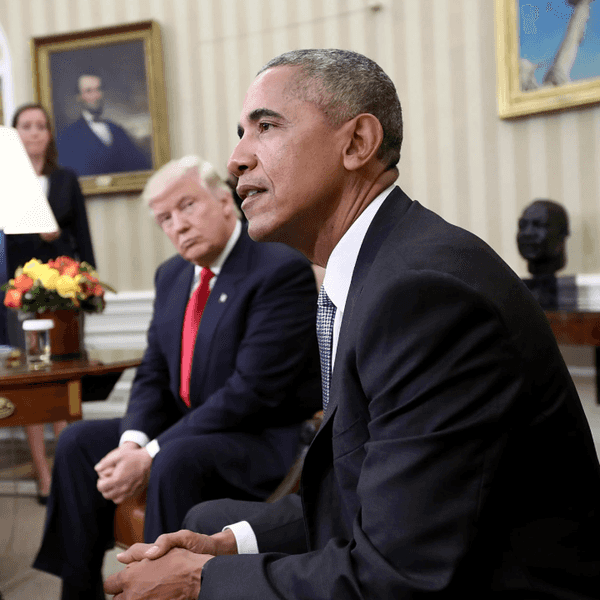
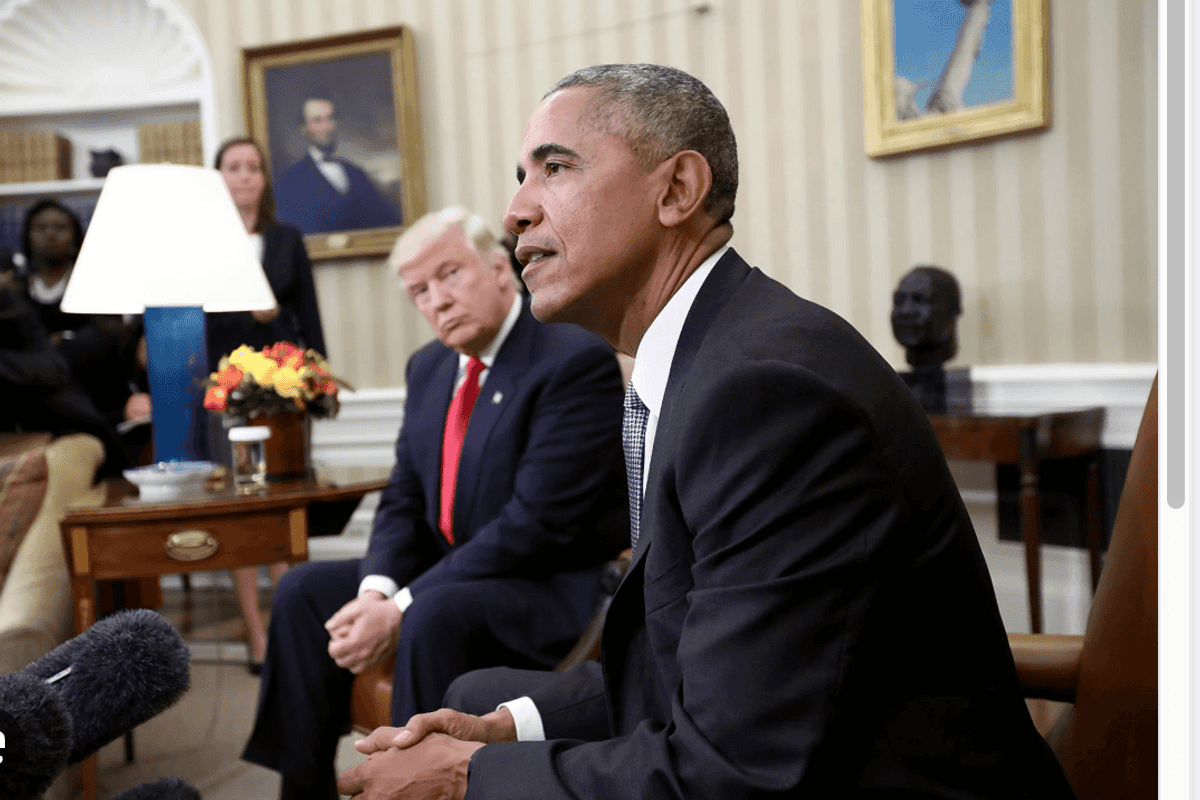
After all the destruction and cost in lives and treasure that would be a terrible outcome, as nearly every sane human being would agree. And yet despite the limp acquiescence that Trump’s idiotic and ruinous policies so often encounter, this need never have happened. Even the most hawkish analysts, who could scarcely contain their enthusiasm for Trump's belligerence, now admit that we are on the brink of an impending security disaster for the United States, Israel and the world. What they have not admitted yet is that the path leading here began with a Trump decision they endorsed in his first term -- to end American participation in the Joint Comprehensive Plan of Action (JCPOA), the 2015 deal with Iran reached by the Obama administration in partnership with Russia, China, and the European Union.
Whether driven solely by Trump's envy and animus toward Obama, or by the machinations of Israeli Prime Minister Benjamin Netanyahu, or both, that rash choice led directly into the current cul-de-sac. That carefully wrought agreement, crafted during nearly two years of talks and consisting of 150 pages plus detailed appendices, included an inspection regime and multiple safeguards against Iran enriching uranium to weapons grade before 2030.
The principal reason that the Iranians now have a stockpile of nuclear "dust" -- actually highly enriched uranium -- is that they began to produce the material again in 2021, three years after Trump destroyed the original agreement. His alternative to the JCPOA was to reinstate economic sanctions on Iran, in what he termed a "maximum pressure" policy to force abandonment of their nuclear project. Like so many Trump policies, it was an absolute failure and, of course, an insult to the international partners whose cooperation had been central to the success of Obama's initiative.
In his usual style, the president has sought to conceal his responsibility for the post-JCPOA fiasco behind a barrage of lies. When he pulled the United States out of the deal, he denounced it as a "decaying" and "rotten" plan that would inevitably permit Iran to acquire a nuclear arsenal. More recently he has claimed that Iran was only weeks away from building weapons that, without his intervention, would have destroyed the entire Mideast. He has promised that his negotiators -- the wholly unqualified and unethical team of Steve Witkoff and Jared Kushner -- are on the verge of unveiling a "far better" agreement.
But those assertions, repeated at nauseating volume on his Truth Social pages, are entirely fictional.
Instead, as his bellicose accomplices in the Republican leadership, the neoconservative right, and the extremist government of Israel can no longer pretend not to see, we will soon confront a simple fact. The world -- and especially the United States and its allies -- would have been more secure if the 2015 nuclear deal with Iran had remained in effect during these years, with continuing diplomatic, military and economic measures to contain Iran and curb its worst ambitions, bolstered by support from our allies and even our adversaries.
The veteran Israeli journalist Nahum Barnea voiced these fears in Yediot Aharonot, warning that Iran's power has increased as a consequence of Trump's war and that his country, like the rest of the planet, is now “subject to the absolute authority of a capricious, hollow, desperate American president." As Barnea noted, the same goes for Netanyahu, who has enabled and abetted Trump even as the White House boxed him out of the ongoing talks.
With his feckless adventurism and ignorance, as well as the incompetence of his advisers, Trump bears the blame for this wreckage. But he is not alone: the guilt is shared by those who promoted his absurd candidacy and his short-sighted policies. They know who they are and so do we.
Joe Conason is founder and editor-in-chief of The National Memo. He is also editor-at-large of Type Investigations, a nonprofit investigative reporting organization formerly known as The Investigative Fund. His latest book is The Longest Con: How Grifters, Swindlers and Frauds Hijacked American Conservatism (St. Martin's Press, 2024). The paperback version, with a new Afterword, is now available wherever books are sold.